Commercial Litigation
Robust, commercially-focused dispute resolution strategies to protect your business interests and secure definitive outcomes in the English courts.

The Legal Context
Commercial litigation in England and Wales encompasses the resolution of complex business disputes governed by common law and statutory frameworks. Resolving these conflicts requires rigorous contractual analysis to address breaches, debt recovery, and agency disagreements, ensuring corporate interests are protected through strategic enforcement and robust legal representation.
Commercial Litigation Services
Legal support is available for businesses navigating complex contractual conflicts and financial disputes within the commercial sector.
Guidance is provided for interpreting complex commercial agreements and resolving disagreements over contractual obligations and performance.
Legal representation is offered to address financial losses and operational disruptions resulting from the failure to fulfil contractual terms.
Assistance is available for managing conflicts between principals and agents, including termination claims under the Commercial Agents Regulations 1993.
Support is provided for resolving supply chain disruptions, quality issues, and contractual breaches involving key commercial suppliers.
Legal guidance is available for navigating contentious issues regarding distribution agreements, exclusivity clauses, and territory rights.
Strategic assistance is offered for the recovery of outstanding commercial debts, late payments, and the enforcement of financial obligations.
Guidance is provided for addressing conflicts relating to the quality, fitness for purpose, and delivery of commercial goods.
Legal support is available for pursuing complex claims related to operational downtime, supply chain failure, and loss of revenue.
Assistance is offered for accurately quantifying financial losses, assessing commercial impact, and calculating appropriate damages for litigation purposes.
Or contact us via email on info@centralchamberslaw.com, or call us on 02035042259
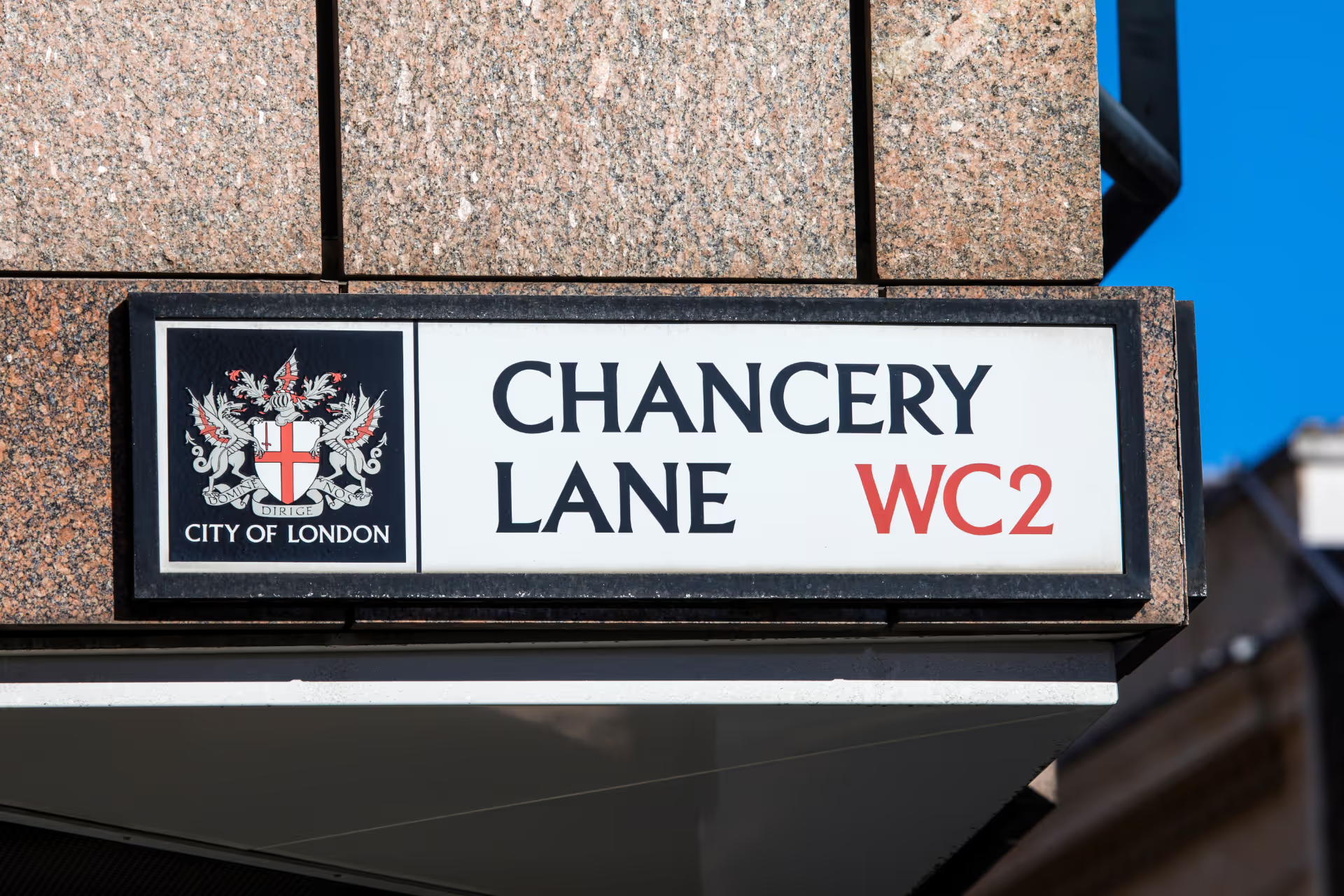
The Legal Heart of London, Chancery Lane
We operate at the epicentre of the UK legal system. Situated steps from the Royal Courts of Justice, the Rolls Building, and the Inns of Court, our physical footprint dictates our access.
For complex civil litigation and commercial disputes, this proximity ensures our team can act without delay. Whether instructing leading counsel, securing High Court injunctions, or lodging urgent applications, our central London base allows for immediate, highly coordinated intervention.
FAQ
Some questions we get, which may help you in this moment
When you receive a Letter of Claim or a formal Claim Form, you are at a critical crossroads in a legal dispute. While they may look similar, they represent two different stages of litigation, and mishandling either can lead to unfavourable financial and legal consequences.
A Letter of Claim, also known as a Letter Before Action, is a formal warning that someone intends to start court proceedings against you. Under the Civil Procedure Rules, parties are expected to exchange enough information to understand each other’s positions and attempt to settle without involving the court.
Ignoring this letter is a high-risk strategy. Even if you believe the claim is meritless, the court can penalise you later by ordering you to pay the other side’s legal costs, because you failed to follow the required Pre-Action Protocols. This stage is actually a vital window of opportunity. It allows for strategic negotiations or Alternative Dispute Resolution (ADR), which can resolve the matter privately and more cost-effectively than litigation.
If you receive a Claim Form, on the other hand, the matter has officially entered the court system. This is more urgent than a preliminary letter. From the moment you are served (which is deemed to occur 2 business days after the documents were posted to your last known address) the countdown begins.
If you do not engage with a claim, the other side can request a default judgment 15 days after you are deemed to have received the Claim Form. Once this judgment is entered, it is a matter of public record that can significantly damage your credit rating for 6 years and allows the other side to take enforcement measures.
There are procedural steps available to protect you in such situations. For instance, filing an acknowledgement of service is a vital holding position and allows you more time to prepare a proper defence. Engaging with a solicitor at this moment is essential to identify potential flaws in the claim that can allow you to have the claim stopped or struck out.
A court judgment (often called a CCJ) is a serious matter that allows a creditor to take aggressive enforcement action, such as sending bailiffs to seize goods or freezing your bank accounts. However, there are solutions to put your mind at ease. The first priority is to determine if the judgment was entered correctly. If you were unaware of the original claim, perhaps due to documents being sent to a previous address, there are procedural mechanisms to apply to have the judgment set aside. This process effectively cancels the judgment and reopens the case, but the court will only grant this if you act quickly after discovering the order.
Immediate legal guidance is essential to ensure your application meets the court's strict requirements.
A judgment is a major indicator of financial risk that stays on your credit report for 6 years. During this time, it can prevent you from obtaining a mortgage, securing a loan, or even getting a mobile phone contract. Many private landlords and letting agents also check these records, meaning a judgment could even stop you from renting a home.
To minimise this damage, paying the debt in full more than 30 days after the order will mark the judgment as satisfied. While the entry remains for the full 6 years, a satisfied status shows future lenders that you have fulfilled your obligations.
Contractual breaches can range from minor failures to fundamental violations that render the entire agreement void. Before initiating a formal claim, the court expects parties to follow certain Pre-Action Protocols, which involve clear correspondence detailing the breach and the resulting loss. This structured approach often provides a solution to the dispute through negotiation or mediation, and helps parties avoid the costs of litigation.
If a claim becomes necessary, the objective is to secure damages that place you in the financial position you would have been had the contract been fulfilled. Depending on the nature of the breach, other remedies may be available, such as specific performance, where the court compels the other party to complete their original obligations, or an injunction to prevent further harm.
Recovering a debt requires a careful strategy to ensure the process remains cost-effective. We begin with formal demands that comply with court standards for debt claims. If the debtor remains unresponsive, obtaining a court judgment is the next step, which then unlocks a variety of enforcement tools to turn that judgment into actual payment.
Depending on the debtor’s assets, the legal solution may involve a Charging Order to secure the debt against their property, an Attachment of Earnings to deduct payments directly from their salary, or a Third-Party Debt Order to recover funds from their bank account. In cases where a debtor is a company, insolvency-based procedures like a Winding-Up Petition can also be considered as a powerful means of prompting payment.
A limitation period is a statutory deadline imposed by the Limitation Act 1980, typically giving you 6 years from the date of a breach or damage to issue a claim. Once this period expires, the claim is time-barred, and the other side will have an absolute defence to block your case, regardless of its merits.
Because these deadlines are non-negotiable, waiting too long can mean losing your right to justice entirely. We recommend a prompt review of any potential claim to ensure you meet all statutory time limits and protect your ability to recover your losses.
Regulated. Accredited. Trusted.